


Methodology Specifications of Iron Ore Portside Index
I. Index Name
Chinese full name: 鐵礦石港口現(xiàn)貨價(jià)格指數(shù)
Chinese Abbreviation: 北鐵指數(shù)
English full name: Iron Ore Portside Index
English Abbreviation: COREX Index
Index Code: IOPI
II. Overview of IOPI
1. Background
With the continuous development of the Chinese iron and steel industry and the profound changes in the global iron ore trade pattern, the iron ore market is growing more demanding of an authoritative and transparent spot price index that reflects the actual trading level.
In recent years, with the evolution of the iron ore circulation model, portside spot trading has become an important part of the Chinese iron ore market, and its activity has been steadily rising. This form of trading possesses notable strengths, including flexible transactions, timely response, pricing that closely aligns with the end-user market, etc. As a result, an increasing number of steel mills and traders choose to complete the procurement and sales in the portside spot market. The price index formed on the basis of the transactions in the Chinese portside spot market can reflect the supply and demand relationship in the spot market in a more timely and more realistic manner.
2. Purpose
Since its establishment in 2012, China Iron Ore Spot Trading Platform (hereinafter referred to as “the Platform”) operated by Beijing Iron Ore Trading Center Corporation (hereinafter referred to as “COREX”) has consistently upheld the principles of independence, openness, and transparency. With a dedicated focus on developing the iron ore spot trading market, the Platform has grown into a leading entity in the industry. COREX has been publishing benchmark prices since its inception, and over the past decade, it has built a deep reservoir of talent and expertise in index compilation and publication, laying a solid foundation for launching the portside price index of iron ore.
To objectively reflect the supply and demand relationship in the iron ore market and promote the development of a scientific and reasonable pricing mechanism, COREX proposes to compile and publish the Iron Ore Portside Index (hereinafter referred to as “IOPI”). On the basis of spot transaction data from Chinese ports, IOPI will be developed through the application of transparent, objective, and scientific methodology specifications in accordance with relevant domestic and international policies and guidelines. With all these efforts, IOPI aims to provide market participants with accurate and reliable information on price index.
III. Index Compilation Approach
1. Reflecting the supply and demand relationship of iron ore with sufficient samples.
Iron ore serves as a vital raw material for the steel industry. IOPI is committed to grounding itself in the supply and demand dynamics of the iron ore portside market by thoroughly collecting samples, seeking to accurately reflect market trends and the central pricing levels.
2. Combining platform information with market information.
Since COREX is an independent third-party iron ore trading platform, IOPI strives to leverage its transparency and make full use of its proprietary data and information from other sources, in order to capture a diverse range of market participants and sampling ports throughout the compilation process.
3. Combining openness with trading volume.
COREX establishes adjustment weights on the basis of the transparency of different types of deals and further refines them according to trading volume to accurately reflect actual market price movements.
4. Combining deals, bids/offers, and market research.
COREX prioritizes the deal data in the compilation of IOPI, particularly the data related to online deals on COREX, while utilizing bids/offers and market research for transition, supplementation, and verification.
5. Combining authenticity verification with outlier elimination.
COREX verifies sample authenticity and employs mechanisms such as outlier elimination to mitigate index fluctuations caused by abnormal prices.
IV. Terms and Definitions
1. Iron ore portside transactions conducted in CNY
The CNY-denominated portside transaction refers to the buying, selling, and delivery of iron ore stored at ports priced in CNY.
2. Base Ports
The base ports in IOPI are the source ports of index samples and the port scope reflected by the IOPI.
3. FOT /WMT (VAT inclusive)
FOT/WMT (VAT inclusive) in IOPI refers to the tax-inclusive amount payable to the sellers after the goods are delivered to the train at the shipping location and loading is completed. This price encompasses VAT and all expenses incurred before loading.
4. Quality Specifications
Quality specifications refer to the content of various elements in iron ore, including iron, moisture, silicon, aluminum, sulfur, phosphorus, and others, and are expressed in percentage (%).
V. Index Basic Settings
1. Index Content
(1) Iron Ore Portside Index (61% Fe Qingdao)
(2) Iron Ore Portside Index (61% Fe Caofeidian)
2. Index Specifications
To ensure that IOPI is reflective of the market, COREX defines the baseline quality specifications on the basis of the portside trading volume and the chemical quality specifications of relevant iron ore brands. Adjustments will be made in response to market changes, as per appropriate established mechanisms.
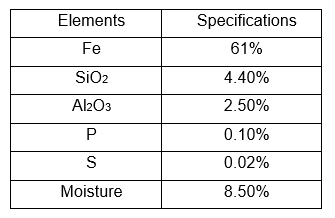
3. Index Unit
IOPI is compiled on the basis of actual price data from the Chinese portside market. According to prevailing market practices, the unit of IOPI is expressed in RMB per wet metric tonne (FOT, inclusive of VAT), with a minimum price fluctuation of RMB 1/wmt. The unit of corresponding CNY dry metric tonne equivalent price is indicated in RMB/dmt, with a minimum price fluctuation of RMB0.01/dmt. Additionally, the unit of USD dry metric tonne equivalent price is indicated in USD/dmt, with a minimum price fluctuation of USD0.01/dmt.
VI. Sample Collection
1. Sample Types
Data samples refer to the original data used for the compilation of IOPI, including deal samples (COREX deals and offline deals), bids/offers samples (COREX bids/offers), and market research data (other price information).
2. Sample Collection Requirements
COREX determines the sample brands for IOPI through comprehensive assessment of market transaction shares, import volumes, and other relevant factors. The sample brands may be adjusted in line with the relevant mechanisms as market conditions evolve.
The sample brands covered by IOPI include: PB Fines, Mac Fines, Newman Fines, Jimblebar Blend Fines, and BRBF, etc.
According to the pricing details included in IOPI, the base ports are established on the basis of their corresponding regional scope:
Pricing Ports for Iron Ore Portside Index (61% Fe Qingdao): Qingdao Port, with radiating ports including Dongjiakou Port, Rizhao Port, Lanshan Port, and Lanqiao Port.
Pricing Ports for Iron Ore Portside Index (61% Fe Caofeidian): Caofeidian Port, with radiating ports including Jingtang Port, Huanghua Port, and Tianjin Port.
The collection of data samples concludes at 18:00 Beijing time on each index compilation and release day (hereafter referred to as “Index Day”). Samples collected thereafter will be included in the next Index Day.
IOPI only accepts price information based on RMB/wmt (FOT, inclusive of VAT). Minimum quantity for each data sample is at least 2,000 wet metric tonnes, with an iron content between 60% and 63%. Samples that do not fall within this specified range will be excluded.
3. Collection Channels
COREX deal samples and bids/offers samples will be obtained through the Platform. Offline deal samples and market research samples will be collected through channels designated by COREX, such as email and system transfer.
4. Collection Content
Deal samples shall include the following price information: names of both counterparties, product brand, price, iron grade, moisture content, quantity, port, values of impurities such as SiO2, Al2O3, sulfur (S), and phosphorus (P), contracts, and other relevant documents.
Bids/offers samples shall include the following information: name of the declaring enterprise, product brand, price, iron grade, moisture content, quantity, port, and values of impurities such as SiO2, Al2O3, sulfur (S), and phosphorus (P).
COREX will also pay attention to non-quantitative factors that may affect prices included in the payment and delivery methods, such as by barge and clean up, and take them into account during compilation.
COREX will rigorously monitor the quality of price information and implement quality control and verification on the basis of requirements for collected content.
VII. Sample Normalization
1. Quality Normalization
Quality Normalization refers to the process of normalizing data samples to the index’s baseline chemical quality specifications based on the value-in-use (VIU) adjustment values for different quality specifications.
Data samples provided with chemical specifications will be normalized according to its actual quality specifications. If chemical specification is not provided, adjustments will be made based on the typical value of each brand.
COREX determines the baseline quality specifications for each sampling brand on the basis of market information and adjustments may be made in line with the relevant mechanisms as market conditions evolve.
2. Port Normalization
Port Normalization is the process of normalizing sample prices from various ports within a region based on port differentials, using the two base ports as foundation.
COREX calculates the current week’s port differentials on the basis of the price information at ports from the previous week. If data from a specific port is insufficient to support the calculation, the latest available value will be carried forward.
3. Outlier Adjustment
COREX will identify outliers in the normalized data samples through the following steps:
(1) Verify the data for any entry errors and correct them if present.
(2) Check for any clauses that may affect prices or abnormal quotation behaviors and exclude the affected data samples if present.
(3) Data samples processed through the above two steps will be subjected to mathematical screening together with data samples where no abnormalities have been detected. Standardized prices that deviate significantly from market levels will be identified as outliers and excluded.
VIII. Index Compilation Process
1. Weighted Calculation
IOPI prioritizes platform trading information and assigns different weights to various types of samples on the basis of the transparency of price data, trading volume weighting mechanism that calculates sample trading volumes according to established weight standards.
When market trading activity is low, or when there are no deal or bids/offers samples for any iron ore brands, COREX will supplement the day’s data samples through market research to support index compilation.
2. Price Equivalence Calculation
Based on the iron ore portside index, COREX will calculate its price equivalence in both CNY dry metric tonne and USD dry metric tonne.
The price equivalence CNY dry metric tonne reflects the price exclusive of the effects of moisture.
The price equivalence in USD dry metric tonne is the USD price adjusted for port fees, moisture content, VAT, and the USD-CNY exchange rate.
3. Concentration Judgment and Response Mechanism
COREX has established response plans to address situations where data samples are insufficient, unreliable, or anomalous, thereby ensuring the quality and consistency of index compilation.
In cases where deal samples are insufficient, resulting in market data from a single entity exceeding 2/3 of the total number of sample data, COREX will expand the collection channels for deal data to reduce data source concentration. Should the imbalance in individual sample proportions persist despite enhanced data collection efforts, supplementary market research information, including other deal data, tradable prices, bids and offers, will be incorporated.
IX. Index Release
1. Index Day
Index Days are determined on the basis of the official working days announced by the Chinese government.
COREX will publish the index release calendar for the upcoming year in December and disclose it to the market through public channels.
2. Release Content and Related Regulations
Release time: IOPI will be released after calculation and necessary internal control procedures on each Index Day.
In case of emergencies, IOPI will be released promptly upon the completion of compilation process, and a notice will be issued as necessary to explain the relevant situation.
Iron Ore Portside Index, along with its equivalence in CNY and USD per dry metric tonne, will be published on COREX’s official website and other designated channels on each Index Day.
3. Error Correction
If an error is identified in the officially released index, COREX will promptly implement corrections and issue a public notice in a prominent manner.
X. Expert Committee
1. Establishment of an Expert Committee
Given the non-standardized nature of iron ore, COREX has established an index expert committee comprised of industry companies and organizations to support the index compilation process, ensuring the index fully and accurately reflects market conditions.
2. Expert Committee Responsibilities
(1) Members of the expert committee may provide recommendations for the VIU adjustment values used for the compilation of the index based on market conditions. The recommendations shall be provided through COREX’s designated channels and will be processed in accordance with the relevant regulations by COREX.
(2) Members of the expert committee may propose their adjustment recommendations on the methodology specification according to the observed market changes. COREX will evaluate these recommendations, and reply will be provided to the relevant committee members.
3. Expert Committee Survey Data Processing Principles
COREX assigns equal weight to the data provided by expert committee members. When data samples are sufficient, COREX will calculate a data after excluding any outliers.
XI. Index Operation Guarantee Mechanism
1. Index Compilation Personnel Management
COREX has developed a comprehensive management system for index compilation personnel that encompasses selection, training, and assessment.
The selection process strictly adheres to COREX’s internal regulations, which requires candidates to possess relevant industry experience and to pass COREX’s assessment.
COREX has designed training programs of regular index compilation and release. It will also conduct regular phased assessments to evaluate the professional competence of index compilation personnel.
COREX has formulated a succession plan and a dynamic personnel management system of the index compilation personnel. It will regularly update and maintain the list of index compilation staff.
2. Data Provision Management
To ensure the authenticity, accuracy, and completeness of sample data, COREX has established “Measures for the Data Provision”, which includes the management of data providers, data provision, and data usage.
COREX confirms the details of the aforementioned management system with data providers annually.
3. Changes to Methodology Specifications
COREX will assess the adequacy, and distribution of index samples, as well as the relevance of the index methodology to market conditions on regular basis, to determine if it is necessary to revise the methodology specifications. If deemed necessary, the index compilation team will make the appropriate revisions according to the evaluation results.
Any revisions that lead to significant changes in the index will be classified as major changes. To ensure the continuity and integrity of the index, COREX has developed a robust internal control mechanism which guarantees that changes are implemented to enable the index to reflect market prices more accurately. Announcements of major changes will be issued in advance on COREX’s official website and trading system, and feedback will be actively solicited regarding the procedures or methods involved in these changes.
4. Conflict of Interest
COREX has established “Measures for Conflicts of Interest” to prevent conflicts of interest from affecting the objectivity, fairness, and credibility of the index.
The “Measures for Conflicts of Interest” outlines potential conflict of interest scenarios, corresponding management measures, and specifies requirements for recording, supervision, and disclosure.
5. Complaint Management
COREX has implemented “Measures for Enquiries and Complaints”, which clearly outlines channels for external enquiries and complaints as well as the corresponding handling procedures. COREX will actively respond to the feedback and suggestions from relevant parties. The personnel responsible for handling complaints operate independently from the index compilation team.
The “Measures for Enquiries and Complaints” will be disclosed on COREX’s official website.
6. Audit Trail
COREX has implemented strict internal control measures to oversee the collection and transmission of data, the details of which, including the identities of the personnel involved in index compilation, judgment records, the reasons and results of data screening, and the internal approval of evaluation procedures are meticulously recorded.
COREX has established a data standard system to regulate the process of data usage, correction and deletion. The system aims to prevent improper handling, elimination or modification of data based on personal judgments.
COREX will conduct regular internal reviews of the index and its development, compilation, and release processes to ensure their rationality and compliance.
7. Information Preservation
COREX preserves relevant information related to the index, including price collection, data screening, personnel identification, and judgment records, for at least five years in the form of system logs, email, internal official document messages, meeting minutes, account books, etc.
8. Compliance Assessment
IOPI is in strict accordance with the “Administrative Measures for the Behavior of Important Commodity and Service Price Indices” (Decree No. 22 of the National Development and Reform Commission, 2024). It is subject to supervisions from all stakeholders and is governed by a robust governance framework and institutional constraints.
An annual self-evaluation of IOPI will be conducted since the date of its release. An additional independent professional organization will be engaged to carry out a third-party evaluation when necessary. The evaluation process will adhere to the principles of independence, objectivity, and confidentiality, with the main content and results of the evaluation disclosed as appropriate.
XII. Supplementary Provisions
1. Interpretation and Revision
COREX reserves the rights to interpret and revise this methodology specification.
The methodology specification and relevant policies are available on COREX’s official website and other designated channels.
2. Effective Date
This methodology specification shall enter into force as of the date of promulgation.
3. Both Chinese and English versions are valid. In case of any inconsistency, the Chinese version shall prevail.
鐵礦石港口現(xiàn)貨價(jià)格指數(shù)編制方案
一、指數(shù)名稱
中文全稱:鐵礦石港口現(xiàn)貨價(jià)格指數(shù)
中文簡稱:北鐵指數(shù)
英文全稱:Iron Ore Portside Index
英文簡稱:COREX Index
指數(shù)編碼:IOPI
二、編制概況
(一)編制背景
隨著我國鋼鐵工業(yè)的持續(xù)發(fā)展以及全球鐵礦石貿(mào)易格局的深刻變化,市場對(duì)權(quán)威、透明、反映真實(shí)交易水平的鐵礦石現(xiàn)貨價(jià)格指數(shù)的需求日益增長。
近年來,隨著鐵礦石流通模式的演變,港口現(xiàn)貨貿(mào)易已成為我國鐵礦石市場的重要組成部分,交易活躍度持續(xù)攀升。港口現(xiàn)貨交易具有成交靈活、反應(yīng)及時(shí)、價(jià)格貼近終端市場等優(yōu)勢,越來越多的鋼廠和貿(mào)易商選擇在港口現(xiàn)貨市場完成采購與銷售。基于中國港口現(xiàn)貨市場交易形成的價(jià)格指數(shù)更能及時(shí)、真實(shí)地反映即期現(xiàn)貨市場的供需關(guān)系。
(二)編制目的
北京鐵礦石交易中心股份有限公司(以下簡稱“北鐵中心”)運(yùn)營的中國鐵礦石現(xiàn)貨交易平臺(tái)(以下簡稱“平臺(tái)”)自2012年成立以來,始終秉持獨(dú)立、開放、透明的運(yùn)營理念,專注于深耕鐵礦石現(xiàn)貨交易市場,已成為行業(yè)領(lǐng)先的鐵礦石現(xiàn)貨交易平臺(tái)。同時(shí),北鐵中心自平臺(tái)成立起開始發(fā)布基準(zhǔn)價(jià),逾10年間在指數(shù)編制及發(fā)布領(lǐng)域積累了豐富的人才和經(jīng)驗(yàn),為推出鐵礦石港口現(xiàn)貨價(jià)格指數(shù)奠定了堅(jiān)實(shí)基礎(chǔ)。
為客觀反映鐵礦石市場供需關(guān)系,推動(dòng)建立科學(xué)合理的定價(jià)機(jī)制,北鐵中心擬編制、發(fā)布鐵礦石港口現(xiàn)貨價(jià)格指數(shù)(以下簡稱“本指數(shù)”),以中國港口現(xiàn)貨交易數(shù)據(jù)為樣本,按照國內(nèi)外相關(guān)政策、準(zhǔn)則和更加透明、客觀、科學(xué)的方法進(jìn)行編制,為市場參與者提供真實(shí)、可靠的價(jià)格指數(shù)信息。
三、指數(shù)編制思路
(一)以充足樣本反映鐵礦石的供求關(guān)系。鐵礦石是鋼鐵行業(yè)重要的生產(chǎn)原料,本指數(shù)堅(jiān)持立足于鐵礦石港口現(xiàn)貨市場供求關(guān)系,充分采集樣本,力求真實(shí)反映市場價(jià)格的運(yùn)行方向及中樞水平。
(二)平臺(tái)信息與市場信息相結(jié)合。本指數(shù)力求充分發(fā)揮北鐵中心作為獨(dú)立第三方的鐵礦石交易平臺(tái)的透明度優(yōu)勢,在編制過程中充分使用平臺(tái)信息,并輔以其他渠道信息,力爭覆蓋各類市場參與者和各采樣港口。
(三)公開度與交易量相結(jié)合。北鐵中心根據(jù)各類交易的公開性設(shè)立調(diào)整權(quán)重,同時(shí)輔以交易數(shù)量加權(quán),真實(shí)反映市場價(jià)格運(yùn)行情況。
(四)成交、申報(bào)與市場調(diào)研相結(jié)合。北鐵中心在編制中優(yōu)先采用交易數(shù)據(jù),尤其是在北鐵中心發(fā)生的線上交易,另采用申報(bào)、市場調(diào)研作為過渡、補(bǔ)充和校驗(yàn)。
(五)真實(shí)性核驗(yàn)與異常值剔除相結(jié)合。北鐵中心對(duì)樣本進(jìn)行真實(shí)性核驗(yàn),通過異常值剔除等機(jī)制,避免少數(shù)特殊價(jià)格引起指數(shù)異常波動(dòng)。
四、術(shù)語定義
(一)鐵礦石港口人民幣交易。港口人民幣交易指以在港口存放的鐵礦石為交易標(biāo)的,基于人民幣定價(jià),進(jìn)行交易和交付的貿(mào)易行為。
(二)采樣港口。本指數(shù)所稱采樣港口,是指數(shù)樣本的來源港口及指數(shù)反映的港口范圍。
(三)濕噸含稅車板價(jià)。本指數(shù)所稱濕噸含稅車板價(jià),是指賣方將貨物送達(dá)發(fā)運(yùn)地火車并完成裝運(yùn)后的含稅價(jià)格,包含增值稅及裝車前所有費(fèi)用。
(四)元素指標(biāo)。本指數(shù)所稱元素指標(biāo),是指鐵礦石中各元素含量,包括鐵含量、水分含量、硅含量、鋁含量、硫含量、磷含量等,均以百分?jǐn)?shù)(%)表示。
五、指數(shù)基礎(chǔ)設(shè)定
(一)指數(shù)內(nèi)容
1.鐵礦石港口現(xiàn)貨價(jià)格指數(shù)(61% 青島港)
2.鐵礦石港口現(xiàn)貨價(jià)格指數(shù)(61% 曹妃甸港)
(二)指數(shù)規(guī)格
為保障本指數(shù)的市場代表性,北鐵中心根據(jù)相關(guān)鐵礦石品種港口現(xiàn)貨交易量及元素含量設(shè)定本指數(shù)元素規(guī)格。如市場情況發(fā)生變化,將按相應(yīng)機(jī)制進(jìn)行調(diào)整。
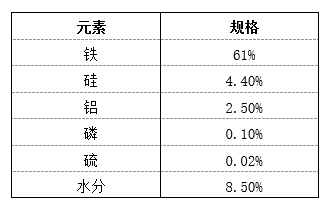
(三)指數(shù)單位
本指數(shù)基于中國港口現(xiàn)貨市場真實(shí)價(jià)格數(shù)據(jù)編制形成,根據(jù)市場交易習(xí)慣,本指數(shù)單位為元/濕噸、含稅車板價(jià),最小價(jià)格變動(dòng)單位為1元/濕噸;同步發(fā)布的人民幣干噸折算價(jià)單位為元/干噸,最小價(jià)格變動(dòng)單位為0.01元/干噸,美元干噸折算價(jià)單位為美元/干噸,最小價(jià)格變動(dòng)單位為0.01美元/干噸。
六、樣本采集
(一)樣本類型
數(shù)據(jù)樣本是指用于編制本指數(shù)的原始數(shù)據(jù),包括成交類樣本(北鐵中心成交、線下成交)、申報(bào)類樣本(北鐵中心申報(bào))、市場調(diào)研數(shù)據(jù)(其他價(jià)格信息)。
(二)采集要求
北鐵中心綜合考慮市場交易占比、進(jìn)口量等因素,確定港口現(xiàn)貨價(jià)格指數(shù)采樣品種,并根據(jù)市場情況變化按相應(yīng)機(jī)制對(duì)采樣品種進(jìn)行調(diào)整。
本指數(shù)采樣品種范圍:PB粉、麥克粉、紐曼粉、金布巴混合粉、BRBF等。
根據(jù)本指數(shù)包含的價(jià)格內(nèi)容,按所反映的區(qū)域范圍設(shè)定采樣港口:
鐵礦石港口現(xiàn)貨價(jià)格指數(shù)(61% 青島港)基準(zhǔn)港:青島港;輻射港口:董家口港、日照港、嵐山港、嵐橋港。
鐵礦石港口現(xiàn)貨價(jià)格指數(shù)(61% 曹妃甸港)基準(zhǔn)港:曹妃甸港;輻射港口:京唐港、黃驊港、天津港。
數(shù)據(jù)樣本采集截止時(shí)間為每指數(shù)編制及發(fā)布日(以下簡稱“指數(shù)日”)北京時(shí)間18:00,該截止時(shí)間后采集的數(shù)據(jù)樣本將被納入下一指數(shù)日。
本指數(shù)的價(jià)格信息只采用以人民幣計(jì)價(jià)的濕噸含稅車板價(jià)。每個(gè)數(shù)據(jù)樣本最少為2,000濕噸,含鐵量在60%-63%,不符合要求范圍的樣本將被排除。
(三)采集渠道
北鐵中心成交、申報(bào)數(shù)據(jù)樣本將通過平臺(tái)獲取。線下成交、市場調(diào)研數(shù)據(jù)樣本將通過電子郵件、系統(tǒng)對(duì)接等北鐵中心指定的渠道進(jìn)行采集。
(四)采集內(nèi)容
成交類樣本的價(jià)格信息包括:成交雙方企業(yè)名稱、貨物的品種名稱、價(jià)格、鐵品位、水分、數(shù)量、港口、SiO2、AL2O3、S、P等雜質(zhì)的含量、合同等相關(guān)文件。
申報(bào)類樣本的信息包括:申報(bào)方企業(yè)名稱、貨物的品種名稱、價(jià)格、鐵品位、水分、數(shù)量、港口、SiO2、AL2O3、S、P等雜質(zhì)的含量。
北鐵中心也將了解付款方式、提貨方式中包含的如轉(zhuǎn)水、清底等其他可能影響價(jià)格的非量化因素,并在編制時(shí)作為考慮因素。
北鐵中心將嚴(yán)格把控價(jià)格信息的質(zhì)量,并通過對(duì)采集內(nèi)容的要求進(jìn)行質(zhì)量控制及驗(yàn)真。
七、樣本標(biāo)準(zhǔn)化
(一)品質(zhì)標(biāo)準(zhǔn)化
品質(zhì)標(biāo)準(zhǔn)化是指按照元素調(diào)整值將數(shù)據(jù)樣本標(biāo)準(zhǔn)化為指數(shù)元素標(biāo)準(zhǔn)的過程。
當(dāng)采集到的數(shù)據(jù)樣本含元素指標(biāo)時(shí),以實(shí)際指標(biāo)進(jìn)行折算和元素調(diào)整,無元素指標(biāo)時(shí),按照各品種基準(zhǔn)值進(jìn)行調(diào)整。
北鐵中心依據(jù)市場信息設(shè)定各采樣品種基準(zhǔn)值,并根據(jù)市場情況變化按相應(yīng)機(jī)制進(jìn)行調(diào)整。
(二)港口標(biāo)準(zhǔn)化
港口標(biāo)準(zhǔn)化是指以兩個(gè)區(qū)域基準(zhǔn)港為基礎(chǔ),把各港口區(qū)域內(nèi)的數(shù)據(jù)樣本價(jià)格按港差進(jìn)行調(diào)整的過程。
北鐵中心根據(jù)前一周的價(jià)格信息確定當(dāng)周港差調(diào)整值,若某一港口前一周數(shù)據(jù)不能支撐計(jì)算,則沿用前值。
(三)異常值處理
北鐵中心將按以下步驟對(duì)數(shù)據(jù)樣本標(biāo)準(zhǔn)化處理后的結(jié)果進(jìn)行異常值判斷:
1.確認(rèn)是否存在數(shù)據(jù)錄入錯(cuò)誤,如有誤,進(jìn)行修正。
2.確認(rèn)是否包含可能影響價(jià)格的條款或異常申報(bào)行為,如存在,排除該數(shù)據(jù)樣本。
3.將通過以上兩步處理后的數(shù)據(jù)樣本與未發(fā)現(xiàn)異常的數(shù)據(jù)樣本統(tǒng)一進(jìn)行數(shù)理篩選,標(biāo)準(zhǔn)化價(jià)格明顯偏離市場水平將被認(rèn)定為異常值予以排除。
八、指數(shù)編制流程
(一)加權(quán)計(jì)算
本指數(shù)優(yōu)先使用平臺(tái)交易信息,并根據(jù)價(jià)格信息的公開性對(duì)各類型樣本設(shè)置不同的調(diào)整權(quán)重,輔以交易數(shù)量加權(quán)機(jī)制,根據(jù)權(quán)重標(biāo)準(zhǔn)對(duì)樣本交易量進(jìn)行加權(quán)計(jì)算。
當(dāng)市場交易活躍度低或所有品種均無成交類樣本和申報(bào)類樣本時(shí),北鐵中心將通過市場調(diào)研補(bǔ)充當(dāng)日數(shù)據(jù)樣本,支撐指數(shù)編制。
(二)折算價(jià)計(jì)算
基于鐵礦石港口現(xiàn)貨價(jià)格指數(shù),北鐵中心將同步計(jì)算其人民幣干噸折算價(jià)及美元干噸折算價(jià)。
人民幣干噸折算價(jià)為剔除水分影響后的價(jià)格。
美元干噸折算價(jià)為對(duì)港雜費(fèi)、水分、增值稅、美元兌人民幣匯率進(jìn)行處理后的美元價(jià)格。
(三)集中度判斷及應(yīng)對(duì)機(jī)制
北鐵中心針對(duì)數(shù)據(jù)樣本不充分、不可靠或存在異常的情況建立了相應(yīng)的應(yīng)對(duì)預(yù)案,以保證指數(shù)編制的質(zhì)量和持續(xù)性。
如成交樣本不充分,導(dǎo)致來自某個(gè)主體的市場數(shù)據(jù)占樣本總數(shù)據(jù)比例超過2/3時(shí),將進(jìn)一步擴(kuò)大成交數(shù)據(jù)收集渠道,以降低數(shù)據(jù)來源集中度。若無法通過強(qiáng)化成交數(shù)據(jù)收集來緩釋單個(gè)樣本占比失衡問題,將輔以市場調(diào)研的其他成交信息、可成交價(jià)格、詢盤和報(bào)盤數(shù)據(jù)。
九、指數(shù)發(fā)布
(一)指數(shù)日
指數(shù)日按國家發(fā)布的法定工作日?qǐng)?zhí)行。
北鐵中心將于每年12月發(fā)布次年指數(shù)發(fā)布日歷,并于公開渠道向市場披露。
(二)發(fā)布內(nèi)容及相關(guān)規(guī)定
發(fā)布時(shí)間:每指數(shù)日完成指數(shù)計(jì)算,并履行必要的內(nèi)控流程后發(fā)布。
如遇突發(fā)事件影響,指數(shù)將在完成編制流程后及時(shí)發(fā)布,并按需發(fā)布公告就相關(guān)情況予以說明。
每指數(shù)日通過北鐵中心官方網(wǎng)站及指定的其他渠道發(fā)布鐵礦石港口現(xiàn)貨價(jià)格指數(shù),及基于該指數(shù)計(jì)算得出的人民幣干噸折算價(jià)及美元干噸折算價(jià)。
(三)錯(cuò)誤修正
如發(fā)現(xiàn)已正式對(duì)外發(fā)布的指數(shù)存在錯(cuò)誤,北鐵中心將及時(shí)更正,并在顯著位置予以公告。
十、專家委員會(huì)
(一)專家委員會(huì)設(shè)置
考慮到鐵礦石非標(biāo)化的品種特征,為保證指數(shù)充分、準(zhǔn)確反映市場現(xiàn)狀,北鐵中心采用由行業(yè)企業(yè)或組織組成的指數(shù)專家委員會(huì)為指數(shù)編制提供支撐。
(二)專家委員會(huì)職責(zé)
1.專委會(huì)成員為指數(shù)編制過程中的品質(zhì)標(biāo)準(zhǔn)化調(diào)整值等提供參考依據(jù),并根據(jù)觀察到的市場情況列示調(diào)整意見,通過指數(shù)編制團(tuán)隊(duì)的指定渠道反映至北鐵中心,北鐵中心將按相關(guān)要求進(jìn)行處理。
2.專委會(huì)成員可根據(jù)市場情況變化,對(duì)指數(shù)編制方案提出調(diào)整建議,北鐵中心評(píng)估后決定是否調(diào)整,并向相關(guān)成員做出回復(fù)。
(三)專家委員會(huì)數(shù)據(jù)處理原則
北鐵中心對(duì)專委會(huì)成員提供的數(shù)據(jù)設(shè)置同等權(quán)重,在數(shù)據(jù)樣本數(shù)量較為充分時(shí),北鐵中心將在剔除離群值后對(duì)剩余數(shù)據(jù)進(jìn)行處理。
十一、指數(shù)運(yùn)行保障機(jī)制
(一)指數(shù)編制人員管理
北鐵中心對(duì)指數(shù)編制人員建立了覆蓋選拔、培訓(xùn)與考核的全周期管理體系。
指數(shù)編制人員的選拔嚴(yán)格遵循北鐵中心內(nèi)部規(guī)章,要求具備一定的行業(yè)經(jīng)驗(yàn),并通過北鐵中心考核認(rèn)證。
北鐵中心就日常指數(shù)編制發(fā)布制定了培訓(xùn)計(jì)劃,并定期對(duì)指數(shù)編制人員開展專業(yè)能力的階段性考核。
北鐵中心建立了指數(shù)編制人員繼任計(jì)劃與動(dòng)態(tài)管理機(jī)制,并定期維護(hù)指數(shù)編制人員清單。
(二)數(shù)據(jù)提供管理
為保障數(shù)據(jù)樣本的真實(shí)性、準(zhǔn)確性和完整性,北鐵中心建立了數(shù)據(jù)提供管理辦法,內(nèi)容包括數(shù)據(jù)提供方的管理、數(shù)據(jù)提供的管理、以及數(shù)據(jù)使用的管理等。
北鐵中心每年與數(shù)據(jù)提供方確認(rèn)辦法內(nèi)容。
(三)編制方案變更
北鐵中心定期就指數(shù)編制方案對(duì)市場的適用性、指數(shù)樣本的充分性與分布等情況開展評(píng)估,評(píng)價(jià)是否有必要對(duì)編制方案進(jìn)行調(diào)整。經(jīng)評(píng)估認(rèn)為指數(shù)編制方案確需修訂的,由指數(shù)編制團(tuán)隊(duì)根據(jù)評(píng)估結(jié)果對(duì)編制方案進(jìn)行必要調(diào)整。
修訂方案使指數(shù)產(chǎn)生實(shí)質(zhì)性變化的,認(rèn)定為重大變更。對(duì)此,北鐵中心建立了審慎的內(nèi)部控制流程,以確保指數(shù)的持續(xù)性、完整性,并確保實(shí)施變化是為了保障指數(shù)可更真實(shí)地反映市場價(jià)格。重大變更將于北鐵中心官網(wǎng)及交易系統(tǒng)提前公告,并就變更的程序或方法廣泛征求意見。
(四)利益沖突
北鐵中心建立了利益沖突管理辦法,防范因利益沖突影響指數(shù)的客觀性、公允性及公信力。
利益沖突管理辦法明確可能的利益沖突場景、對(duì)應(yīng)管理措施及記錄、監(jiān)督與披露要求。
(五)投訴管理
北鐵中心建立了指數(shù)咨詢與投訴管理辦法,明確了外部咨詢與投訴渠道及處理流程,并將積極回應(yīng)相關(guān)方的意見建議。投訴處理人員獨(dú)立于指數(shù)編制團(tuán)隊(duì)。
指數(shù)咨詢與投訴管理辦法通過北鐵中心官網(wǎng)進(jìn)行披露。
(六)審計(jì)追蹤
北鐵中心建立了嚴(yán)格的內(nèi)部控制措施,對(duì)數(shù)據(jù)采集、傳輸過程進(jìn)行管理,并對(duì)指數(shù)編制人員身份、判斷記錄、數(shù)據(jù)篩選理由及結(jié)果、評(píng)估程序內(nèi)部簽批等過程細(xì)節(jié)進(jìn)行詳細(xì)記錄。
北鐵中心制定了數(shù)據(jù)標(biāo)準(zhǔn)體系,規(guī)范數(shù)據(jù)的使用、修正、刪除流程,避免以個(gè)人經(jīng)驗(yàn)違規(guī)處理、剔除、修改數(shù)據(jù)的情形。
北鐵中心內(nèi)部定期檢查指數(shù)研發(fā)、編制流程、指數(shù)發(fā)布過程和結(jié)果的合理性、合規(guī)性。
(七)信息保存
北鐵中心通過系統(tǒng)日志、來往郵件、內(nèi)部公文系統(tǒng)消息、會(huì)議紀(jì)要、臺(tái)賬等形式,對(duì)涉及指數(shù)的相關(guān)信息,包括價(jià)格采集、數(shù)據(jù)篩選、人員身份、判斷記錄等保存至少五年。
(八)合規(guī)評(píng)估
本指數(shù)嚴(yán)格遵循《重要商品和服務(wù)價(jià)格指數(shù)行為管理辦法》(國家發(fā)展改革委令 2024 年第 22 號(hào)),接受各方監(jiān)督,并從治理架構(gòu)、制度約束等方面進(jìn)行嚴(yán)格約束。
本指數(shù)自發(fā)布之日起,每年對(duì)指數(shù)進(jìn)行自評(píng),必要時(shí)委托獨(dú)立專業(yè)機(jī)構(gòu)開展第三方評(píng)估,評(píng)估過程秉承獨(dú)立、客觀和保密原則,并以適當(dāng)方式披露評(píng)估主要內(nèi)容和結(jié)果。
十二、 附則
(一)解釋與修訂
本編制方案由北鐵中心負(fù)責(zé)解釋和修訂。
編制方案及相關(guān)制度規(guī)范于北鐵中心官網(wǎng)及其他指定渠道披露。
(二)生效日期
本編制方案自發(fā)布之日起實(shí)施。

Official Wechat

Official Weibo

APP for Android

APP for iOS
Copyright ? 2021 Beijing Iron Ore Trading Center Corporation, All Rights Reserved

 京公網(wǎng)安備11010702002121號(hào)